When I heard that, as a part of the new teaching program at the University of Victoria, I would be required to take EDCI 373: Indigenous Education, I was really excited. I was truly inspired and anxious to get started. I felt honoured to be a part of the first University that encouraged and promoted Indigenous Education. Back in September, I didn’t have a very broad knowledge base about Indigenous peoples nor did I understand a lot of the issues and complexities of the Indigenous way of life. It is now December and I feel like I have learned a lot. I sincerely believe that the experience I had in EDCI 373: Indigenous Education will follow me and enrich my teaching when I enter the profession.
I came into this course with an open mind. I was very eager to learn. Most of my curiosity came from my current surroundings. I moved to Victoria five years ago from Toronto – a city that is very out of touch with its Indigenous population. When I came to BC, I was stunned and shocked. There was respect, acknowledgment and appreciation of the Indigenous peoples living here that was absent in Toronto. Prior to this course, all of the Indigenous knowledge I had was based on grade 8 social studies and History 131: Canada to Confederation. We were taught the bare minimum and most of it was from one perspective. It was refreshing and interesting to see the other side of things; to dig deeper and finally understand several aspects of Indigenous life.
For our seminar, we looked at Jo-Ann Archibald’s chapter, “The Power of Stories to Educate the Heart.” The article was all about storytelling and the ancient oral tradition of storytelling. The article itself provides readers with historical background, key facts, important issues, and recurring themes when it comes to the oral tradition of storytelling. I really like the idea that stories are more than words and text. Stories really have the power to heal and teach. There are morals and themes and an intricate web of understanding and appreciation that comes from reading a simple tale. There is an energy and a strength that is transmitted from the storyteller to the listener. Stories challenge us to think, use our imaginations, and examine our emotional reactions; they are informative and force us to reflect on our behavior and future actions. They give us a chance to gain an appreciation for our spiritual nature. We give them life by creating connections and being engaged in the story. I also really like the fact that storytelling is a common tradition among many cultures. It is a tradition that is cross-cultural – something that we have in common. Stories do not discriminate; nor are they exclusive. It’s common ground and a piece of heritage that we share no matter the colour of our skin, religion we practice, or cultural belief system we belong to.
To educate our colleagues about storytelling and its implications we began our seminar with a game of broken telephone. We came up with a sentence and it was passed along the circle. By the end of the circle, the sentence was so mangled that it reinforced the idea that stories and oral storytelling is a delicate process and needs to be understood and taken seriously. We then had guest speaker, Resident Elder Joyce Underwood come in and tell us a story We simply asked her to come share a story and without hesitation she came into our classroom and told us a story about perseverance and self-growth. The inspirational story she told us was deep and meaningful and I’m sure that it touched us all in a different way.
I really liked the idea of using stories to teach important moral and life-long lessons. I loved the idea of integrating stories and storytelling into the classroom; it would be really easy to bring this significant aspect of Indigenous practice into both my teaching areas: English and Social Studies. There’s an entire unit in English that looks at short stories – this would be where many of the publicly accessible stories could be used. I could even bring in guest speakers to tell stories or take the students to a traditional storytelling event at a local reservation. By bringing to life some of the stories from different Indigenous cultures, I would be providing my students with a different perspective and expand their breadth of knowledge and understanding. In social studies we look at Indigenous peoples primarily from a European perspective; it would be refreshing and extremely helpful to the students if they could immerse themselves in the culture and objectively understand the histories of both sides. Using stories would be an easy way to immerse the students in the culture and have them really understand a lot of where Indigenous beliefs come from.
It has honestly been a real privilege learning about the different cultures within the Indigenous community. I just wish that we could have learned more. The University of Victoria seems extremely committed to making the environment more welcoming to Indigenous peoples; as well as to help and provide resources for language revitalization; and finally to educate both Indigenous and non-Indigenous students in Indigenous ways of knowing and being. It is important for us, as prospective teachers, to be aware of the history and culture that is presented in our classrooms. We must provide our students with the opportunity to engage and fully understand the Indigenous ways of life. We must be sensitive and understanding, accommodating and fair, respectful and compassionate especially when tackling and addressing the controversial issues that surround Indigenous peoples. Students today are bombarded with information. They soak this information up like a sponge in a bucket of water. They are so impressionable that we, as teachers, must be careful how we address certain issues. As teachers we light the way for our students. We hold their future in our hands and if we are not careful we may be just as damaging as the teachers before us. I’m so glad that this course has opened my eyes and given me a new outlook and perspective.
Wednesday, December 15, 2010

Wednesday, December 8, 2010
Saturday, December 4, 2010
No Pressure

This past Thursday I went to see the documentary film, "Waiting for Superman." I found this film to be extremely moving and powerful. As a future teacher I left the film feeling a lot of pressure, but I also felt a sense of hope. In short, this documentary film examines the failures of the American public education system by following the lives of five students who are negatively affected by this system. Each of the five students are extremely bright, smart, and have that thirst for knowledge that, as teachers, we can only hope our students will have. Unfortunately, they are currently in schools that are failing them - these schools are referred to as "drop-out factories" or "academic sinkholes" which in itself is a scary thought. Rather than celebrating and supporting these students' achievement the education system has decided their fate based on the neighborhood they live in, the school system they belong to, and the teachers that teach them. Because of poverty and the unfortunate circumstances that these students find themselves in, they are placed on tracks which dictate their future. This future usually involves teen pregnancy, drugs, jail, and/or death. I won't divulge any more because I want YOU to go see it.
I highly recommend this movie for everyone. As teachers we light the way for our students. We hold their future in our hands - no pressure.
Thursday, November 25, 2010
Teachers are told: Use Facebook or Risk Becoming Irrelevant!

A wonderful colleague of mine, Julia Cross (who's blog can be viewed by clicking here), posted this article on - ironically enough - her Facebook page. At first glance I thought is was just a silly quiz, but upon further investigation I realized that it was an article entitled: "Use Facebook or risk becoming irrelevant, teachers told at Vancouver Conference." The article appeared in today's Vancouver Sun. [Click here to view article in full] The article really speaks for itself and I would highly recommend giving it a read - as well, read the comments that people posted to the article.
At this years BC College of Teachers conference, Steve Dotto, a technology guru, gave a key note speech about technology and the classroom. He testified that "social media is changing our world profoundly" and that "understanding this world is our responsibility and we have to provide some form of leadership." The article did not disclose how we, as teachers, provide this leadership, but it did report that "all of our reasons for not being online are not good reasons."
While the article was interesting to read, the comments were more entertaining. The article and comments combined seemed to sum up a lot of what we've been talking about in our EDCI 336 class. Is there a line between technology and teaching? If so, where is drawn? As new teachers are we being forced to push that line further and further beyond our comfort zones? Are there right and wrong reasons for not being online?
In response to the article, one person wrote:
I did not agree with a lot of what the article was saying, however it does raise a lot of important issues. Can a teacher become irrelevant if they don't have a Facebook page? How? Is technology so advanced and so important to students that we have to adapt? Even if teachers did have Facebook pages, how do they "friend" their students without crossing certain boundaries?
Overall, I felt like the article was blaming teachers for their technological failures because they refused to give into the hype and media of Facebook. I'll be the first to admit that I not only have a Facebook account, but I'm addicted to it. I check my page anywhere between 20 and 100 times a day. However, my security settings are extremely high, and I check them often; I do not befriend people who I do not know, nor do I add people for the sake of adding them; I try my best to censor what I post on Facebook. I use my Facebook account to stay in touch with my friends, colleagues, and family. My Facebook page is for me and for me to interact with the people who are closest to me. I do not intend to befriend my students because I feel that it would crossing a line. My students will be my students, they are not my "friends"; they have enough friends, and as a teacher I have to be the adult and guide them through a very important and confusing time in their lives, I have to be the role model.
How do you feel about it?
Until Next Time
LC
Thursday, November 18, 2010
Using Excel in the Classroom
In this week's technologies class we spent a lot of time looking and exploring Microsoft Excel. It was interesting to learn that spreadsheets can be used in a number of ways - not just for report cards and not just for math. Being an English and History teacher I'm far more rehearsed in Microsoft Word than I am in Excel.
Whenever I think about using Excel, I think about math, and graphs, and equations, and formulas, and I usually get a headache; I hardly think about rubrics and grades, and words. The resources that were given to us in this particular technologies class opened up a whole new world for me. Excel proved to be very useful - even in my subject areas.
One website that was given to us used a typical math class; it taught students about Rational Numbers and their relationships to each other. Students could use Excel to explore fractions and the relationship between fractions and three other ways we represent numbers (decimals, percents, and pie graphs). Click here for the website.
As for my subject areas, Excel could be used to create a "Branching Story." As the teacher, I would create a very basic story in Excel with two possible directions that it could go in. Like the branches of a tree, students could interactively decide how the story would unfold by clicking one of the options given. As an assignment, I would have the students create their own stories; they would responsible for creating the two different directions that the story could travel in as well as creating an Excel document to display their story.
On the same website, the classic Mad Libs game comes to life using Excel. Students input the required fields like nouns, verbs, adjectives, etc. to create a funny story. I think this would be a great way to review the parts of speech and the elements of a sentence. It would reinforce proper writing and that writing can be fun.
As an English and History teacher I would never have thought to use Excel in my classroom except for grades and attendance. Knowing what I know now, it would be easy to integrate Excel. I would most likely use it as a study tool as seen on this website where students can study and test themselves before coming to write the test in class. I really liked the "Branching Story" idea - it allows the students to use the technology they love some much, as well as exercise creativity to create a story with all of the elements (character, plot, etc.) discussed in class.
Prior to this class, I associated Excel with math and numbers and headaches; but now, it could be a very useful, interactive tool that adds variety to the classroom.
Until next time,
LC
Whenever I think about using Excel, I think about math, and graphs, and equations, and formulas, and I usually get a headache; I hardly think about rubrics and grades, and words. The resources that were given to us in this particular technologies class opened up a whole new world for me. Excel proved to be very useful - even in my subject areas.
One website that was given to us used a typical math class; it taught students about Rational Numbers and their relationships to each other. Students could use Excel to explore fractions and the relationship between fractions and three other ways we represent numbers (decimals, percents, and pie graphs). Click here for the website.
As for my subject areas, Excel could be used to create a "Branching Story." As the teacher, I would create a very basic story in Excel with two possible directions that it could go in. Like the branches of a tree, students could interactively decide how the story would unfold by clicking one of the options given. As an assignment, I would have the students create their own stories; they would responsible for creating the two different directions that the story could travel in as well as creating an Excel document to display their story.
On the same website, the classic Mad Libs game comes to life using Excel. Students input the required fields like nouns, verbs, adjectives, etc. to create a funny story. I think this would be a great way to review the parts of speech and the elements of a sentence. It would reinforce proper writing and that writing can be fun.
As an English and History teacher I would never have thought to use Excel in my classroom except for grades and attendance. Knowing what I know now, it would be easy to integrate Excel. I would most likely use it as a study tool as seen on this website where students can study and test themselves before coming to write the test in class. I really liked the "Branching Story" idea - it allows the students to use the technology they love some much, as well as exercise creativity to create a story with all of the elements (character, plot, etc.) discussed in class.
Prior to this class, I associated Excel with math and numbers and headaches; but now, it could be a very useful, interactive tool that adds variety to the classroom.
Until next time,
LC
Monday, November 1, 2010
This is Why I'm an English Teacher
There are three vending machines and all of them are mislabeled. One machine dispenses only Coke, the other machine dispenses only Pepsi, and the final machine randomly dispenses Coke or Pepsi. Each pop is a dollar.


How many loonies will it take to determine which vending machine as only Coke, only Pepsi, and Coke and Pepsi?
Our lovely Psychology professor posed this question to the class today, and I have to say the answer shocked me. It was so logical and so surprising that I had to exclaim, "This is why I'm an English teacher."
Have fun, good luck
Until Next Time,
LC
Setting the Tone
It's been a while since I've discussed any of the other mini lessons that weren't my own. This is a real shame because my fellow teachers have put a lot of effort into their mini lessons and have provided us with a lot of great ideas and resources that we can use in our own classrooms.
On Monday November 1, Lindsey did a fabulous lesson on "TONE". She started by having us write a little paragraph about a topic that we really liked. As we were writing, she stipulated that we couldn't say "I really like this because...". We had to convey our feelings about the topic through the implied tone in our writing. She then had us write about the same topic as though we hated it. The same stipulation, (that we couldn't say, "I hate this because") was still in play. This exercise was fabulous and a great way for the teacher to evaluate what the students already knew about the topic of tone. Because we weren't allowed to directly say, "I like/hate this topic because" we had to resort to other words and phrases that conveyed the same meaning.
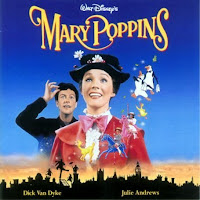
 Lindsey then showed us two "spoof" trailers: one for The Shining and the other for Mary Poppins. These trailers were created using a different tone; let me explain, The Shining is known as a horror film and the original trailer depicts the film as such. The spoof trailer, created using a happy tone, made the film look as though it was a heart-felt family comedy. Mary Poppins is a beloved children's film; however the spoof trailer makes it look like a horror film. Lindsey successfully integrated technology into the classroom and relevantly emphasized the importance of tone through visual media.
Her final activity was a group activity where each group was given a word that describe a certain tone (example: love); she also gave us a topic: taking your dog for a walk through the park. In groups we had to write a paragraph/short story that expressed this tone and the rest of the class had to guess the tone word.
Describing tone and getting students to actually understand the implications and importance of tone can be difficult - it's one of those secondary elements that is usually passed over or simply ignored. From personal experience I find that teachers overlook tone because it's already evident in their students writing. They do not take the time to actually explain it; nor do they take the time to express the importance of tone to their students. Tone is fairly instinctive and natural - if you are angry about something, you will write in an angry tone; if you are happy about something, you will write about it in a happy tone. It's unfortunate that some teachers abuse this unconscious ability to add tone to a piece of writing and skip over the topic.
Other mini lesson's I've missed:
Symbolism in To Kill a Mockingbird
This lesson introduced the many symbols in the classic novel, To Kill a Mockingbird. The lesson began with the opening scene from the 1962 black and white film To Kill a Mockingbird. As a class we discussed the various symbols and their possible meanings; then in groups, we read a few key passages from the novel and discussed key symbols and their implications.
Introduction to the Persuasive Essay
This lesson was really interesting. It began with the class being divided into half - pro and con. In our groups, depending on what side of the room we were on, we had to debate whether students should be given homework. Individually, we had to come up with reasons that supported our side of the debate. Then as a group come up with our "argument" and present it to the class in a classic debate situation. This was a really great way to have students stick to one point of view. The question was very relevant to students and was one that the students could argue. For "homework," students had to write a persuasive paragraph that argued the opposite side of the argument.
So far the mini lessons have been really great and really informative. With each new lesson, my resource package for teaching various topics in English is growing. I am thankful for my colleagues and their willingness to share their ideas. The class environment we have created is solid and supportive - we are, after all, in this together.
Until next time,
LC
On Monday November 1, Lindsey did a fabulous lesson on "TONE". She started by having us write a little paragraph about a topic that we really liked. As we were writing, she stipulated that we couldn't say "I really like this because...". We had to convey our feelings about the topic through the implied tone in our writing. She then had us write about the same topic as though we hated it. The same stipulation, (that we couldn't say, "I hate this because") was still in play. This exercise was fabulous and a great way for the teacher to evaluate what the students already knew about the topic of tone. Because we weren't allowed to directly say, "I like/hate this topic because" we had to resort to other words and phrases that conveyed the same meaning.
 Lindsey then showed us two "spoof" trailers: one for The Shining and the other for Mary Poppins. These trailers were created using a different tone; let me explain, The Shining is known as a horror film and the original trailer depicts the film as such. The spoof trailer, created using a happy tone, made the film look as though it was a heart-felt family comedy. Mary Poppins is a beloved children's film; however the spoof trailer makes it look like a horror film. Lindsey successfully integrated technology into the classroom and relevantly emphasized the importance of tone through visual media.
Her final activity was a group activity where each group was given a word that describe a certain tone (example: love); she also gave us a topic: taking your dog for a walk through the park. In groups we had to write a paragraph/short story that expressed this tone and the rest of the class had to guess the tone word.
Describing tone and getting students to actually understand the implications and importance of tone can be difficult - it's one of those secondary elements that is usually passed over or simply ignored. From personal experience I find that teachers overlook tone because it's already evident in their students writing. They do not take the time to actually explain it; nor do they take the time to express the importance of tone to their students. Tone is fairly instinctive and natural - if you are angry about something, you will write in an angry tone; if you are happy about something, you will write about it in a happy tone. It's unfortunate that some teachers abuse this unconscious ability to add tone to a piece of writing and skip over the topic.
Other mini lesson's I've missed:
Symbolism in To Kill a Mockingbird
This lesson introduced the many symbols in the classic novel, To Kill a Mockingbird. The lesson began with the opening scene from the 1962 black and white film To Kill a Mockingbird. As a class we discussed the various symbols and their possible meanings; then in groups, we read a few key passages from the novel and discussed key symbols and their implications.
Introduction to the Persuasive Essay
This lesson was really interesting. It began with the class being divided into half - pro and con. In our groups, depending on what side of the room we were on, we had to debate whether students should be given homework. Individually, we had to come up with reasons that supported our side of the debate. Then as a group come up with our "argument" and present it to the class in a classic debate situation. This was a really great way to have students stick to one point of view. The question was very relevant to students and was one that the students could argue. For "homework," students had to write a persuasive paragraph that argued the opposite side of the argument.
So far the mini lessons have been really great and really informative. With each new lesson, my resource package for teaching various topics in English is growing. I am thankful for my colleagues and their willingness to share their ideas. The class environment we have created is solid and supportive - we are, after all, in this together.
Until next time,
LC
Subscribe to:
Posts (Atom)